
My mom is 92 and texts from her iPhone, skillfully using emojis. She also remembers going to church in a horse-drawn cart. The span and speed of technology during her lifetime is mind-boggling.
In our family, tech support is a generational thing. Our parents think we’re wizards. When we’re stuck, we go to our kids. Our grandkids are digital natives. But I’m curious. With the advent of AI (artificial intelligence) will any of us need human assistance going forward?
My son, a software engineer, makes AI work harder than anyone I know. In his spare time, he likes to create phone apps. Or shall I say he likes to tell AI what type of phone app to create. When AI completes a task and gives him the next step, he orders AI to do it. (Check out Little Deals in the Apple App Store and www.littledealsapp.com.)
There are many jobs that seem destined to be replaced with AI. I never thought of mine being in that category until I asked ChatGPT, “How does AI help people get and stay more organized?”
It readily admitted being unable to do the actual hands-on organizing but offered more options of assistance than I had thought of. Many of them focus on planning and strategy which is a common challenge.
Here are five Timely Tips to work smarter not harder with AI.
Timely Tips to work smarter not harder with AI
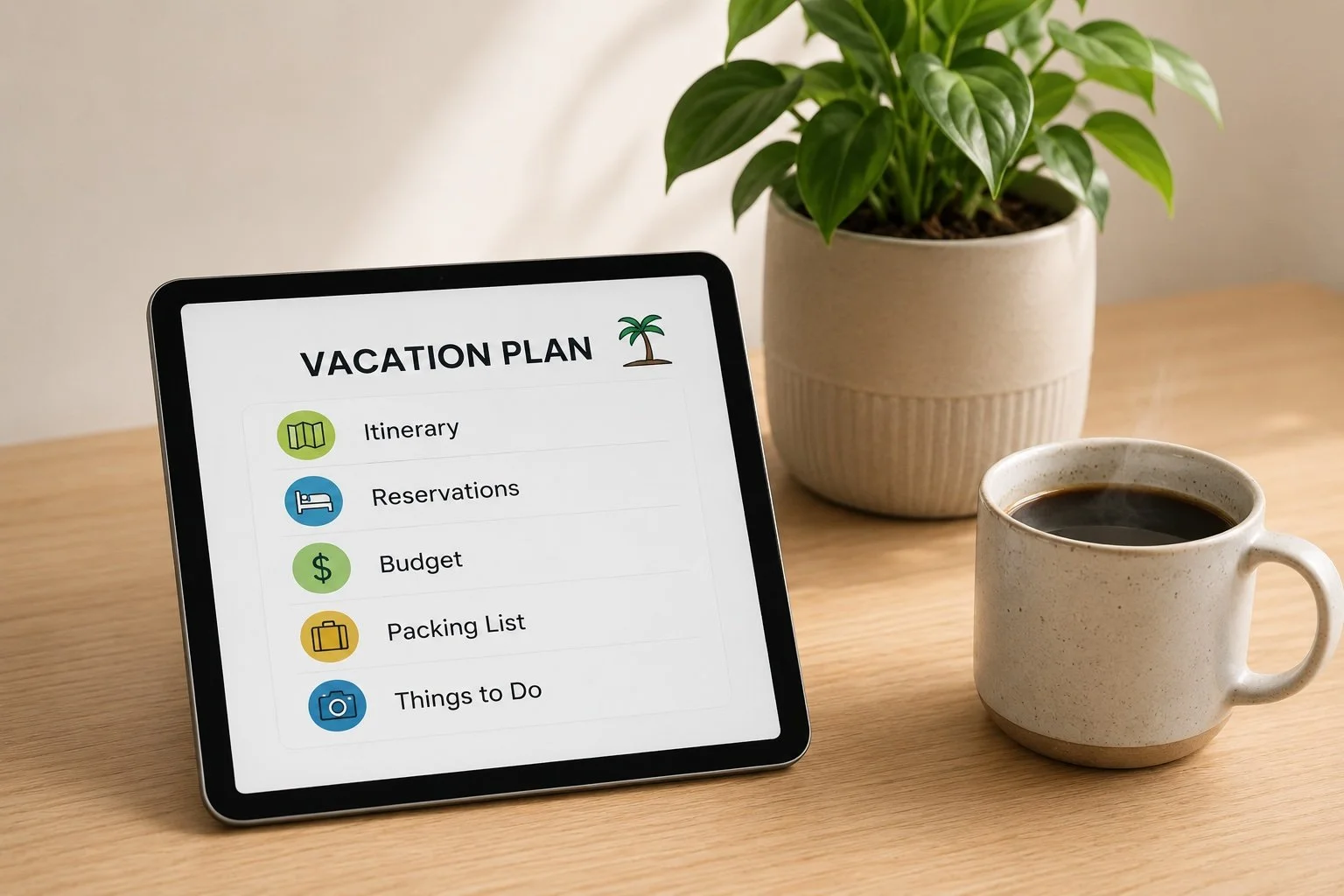
Image generated by ChatGPT
CREATE ORGANIZING STEPS
When overwhelmed with a cluttered room or area request AI to break it down for you. Ask, “What steps should I take to organize the garage?” It may ask some questions to help define the particulars, and then provide a plan of action.
CREATE PERSONALIZED ROUTINES
Routines decrease stress and increase productivity. Give AI a list of tasks and ask it to break it down into a routine. For young families morning and evening routines are especially helpful. For older folks it might be a routine for taking medications or exercising. Maybe your housekeeper needs a routine to stop overlooking areas of concern to you. Take it a step further and ask AI to transform the routine into a printable check-off chart.
ORGANIZE INFORMATION
There are endless ways AI helps you gather and organize information—home projects, medical info, recipes, gift ideas, etc. The one example that got me excited was when AI suggested a question like, "We're retired, have ten days in September, want to drive no more than six hours a day, enjoy scenic areas and historic towns, and have a budget of $3,500." Based on that, AI can recommend several trip options, create an itinerary with a daily schedule, provide hotel and restaurant recommendations, points of interest, packing checklists, and even options for rainy days. (We’re not quite retired, but I’m keeping this idea in my back pocket.)

Image generated by ChatGPT
PROJECT MANAGEMENT
Here again is the benefit of reducing overwhelm. Describe your project and ask for steps. I tried it out with our “have a neighborhood ice cream social” project. In addition to basic steps, it provided a list of tips, supplies, a fun invitation, and creative ideas for décor and games. So helpful!
COACHING & ACCOUNTABILITY
Example from AI: "Today I want to organize my office." AI might respond with: Spend 15 minutes clearing the desk. Take a short break. File papers for 20 minutes. Tell me what you finished, and we'll plan the next step.Sometimes that’s all you need.
wise words
Combinations of humans and AI work best when each party can do the thing they do better than the other. —Tim Malone MIT Sloan Professor
NOTE: Use AI as a helpful assistant—not the final word on all things. Even AI admits it is fallible. It can serve as a tool for organizing, learning, and creating, but always administer your own good judgment.